
Close Menu
Westside People
    Facebook X (Twitter) Instagram
    Westside People
    Subscribe
    • Home
    • Top News
    • World
    • Economy
    • science
    • Tech
    • sport
    • entertainment
    • Contact Form
    Westside People
    Home»science»Dead NASA satellite returns to Earth after 38 years
    science

    Dead NASA satellite returns to Earth after 38 years

    Harper WinslowBy Harper WinslowJanuary 9, 2023No Comments2 Mins Read
    Facebook Twitter Pinterest LinkedIn Reddit WhatsApp Email
    Dead NASA satellite returns to Earth after 38 years
    Share
    Facebook Twitter Pinterest Reddit WhatsApp Email

    Sign up for CNN’s Wonder Theory science newsletter. Explore the universe with news of amazing discoveries, scientific advances, and more.


    CNN
    –

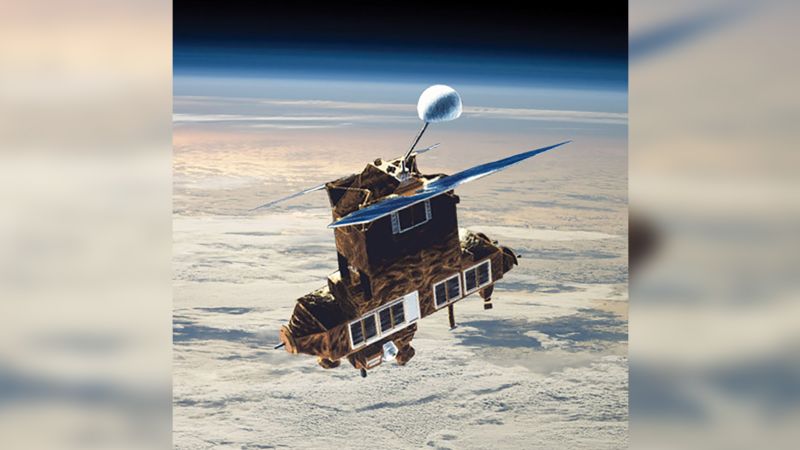
    A NASA satellite has returned to Earth after 38 years of orbiting the planet.

    The Earth’s Radiation Budget Satellite, known as ERBS, was launched in 1984 aboard the space shuttle Challenger.

    Until 2005, data from ERBS helped researchers explore how Earth absorbs and radiates energy from the sun, and measured the concentration of ozone, water vapor, nitrogen dioxide and aerosols in Earth’s stratosphere.

    The US Department of Defense confirmed that ERBS re-entered Earth’s atmosphere Sunday at 11:04 p.m. ET over the Bering Sea, according to a statement from NASA.

    It was not immediately clear if parts of the satellite survived re-entry. Most of the satellite was expected to burn up as it moved through the atmosphere. NASA calculated that the risk of harm to anyone on Earth was very low — about 1 in 9,400.

    The satellite has far exceeded its two-year life expectancy, operating for a total of 21 years.

    NASA said an instrument aboard ERBS, the Stratospheric Aerosol and Gas Experiment II (SAGE II), collected data that confirmed that the ozone layer is declining on a global scale.

    This data helped shape it Montreal Protocol Convention, An international agreement signed by dozens of countries in 1987, it resulted in a significant worldwide reduction in the use of ozone-destroying chlorofluorocarbons (CFCs) – chemicals that were once commonly used in vaporizers, refrigeration and air conditioners.

    If no CFC ban is agreed, the world will be on track for a collapse of the ozone layer and an additional 2.5°C of global warming by the end of the century, found a 2021 study.

    Today, SAGE III on the International Space Station is collecting data on the health of the ozone layer.

    Harper Winslow
    Share. Facebook Twitter Pinterest LinkedIn WhatsApp Reddit Email
    Previous ArticleRising undefeated MMA superstar Victoria ‘The Prodigy’ Lee Dead at age 18
    Next Article Kanye West was seen for the first time in weeks with a mystery woman

    Related Posts

    New Theory Suggests the Big Bang May Be Simpler Than We Thought

    April 3, 2026

    NASA Releases Striking Images From Latest International Space Station Spacewalk

    April 1, 2026

    NASA Asteroid Debris May Bring ‘Beautiful, Luminous’ Light Show Above Earth

    August 24, 2024

    NASA announces the possibility of returning astronauts stranded on board the Starliner spacecraft | Space

    August 23, 2024

    Latest news on climate ‘doomsday’ scenarios: Atlantic circulation and ice melt

    August 23, 2024

    How to watch it in Vero Beach or Sebastian

    August 23, 2024
    Add A Comment
    Leave A Reply Cancel Reply

    Navigate
    • Home
    • Top News
    • World
    • Economy
    • science
    • Tech
    • sport
    • entertainment
    • Contact Form
    Pages
    • Home
    • Privacy Policy
    • Editorial Policy
    • DMCA
    • About Us
    Facebook X (Twitter) Instagram Pinterest
    © © 2026 WestsidePeopleMag.com. Independent stories, culture, and community coverage. All rights reserved.

    Type above and press Enter to search. Press Esc to cancel.