
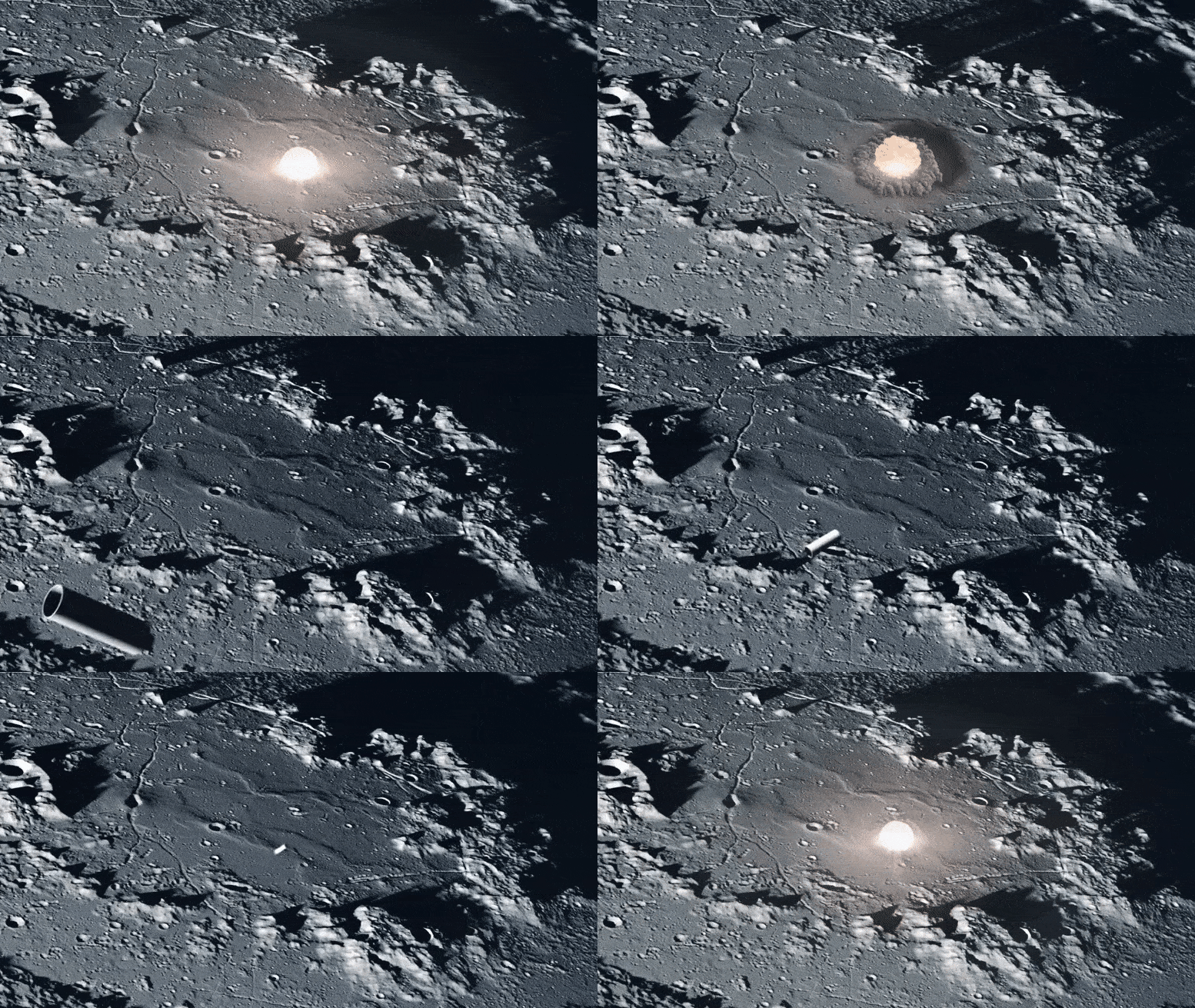
Artist’s animation of a rocket hitting the moon.
Astronomy scientists Discover a missile object heading towards moon collision late last year. The impact occurred on March 4, 2022, with[{” attribute=””>NASA’s Lunar Reconnaissance Orbiter (LRO) later spotting the resulting crater. Surprisingly the crater is actually two craters, an eastern crater (18-meter diameter, about 19.5 yards) superimposed on a western crater (16-meter diameter, about 17.5 yards).
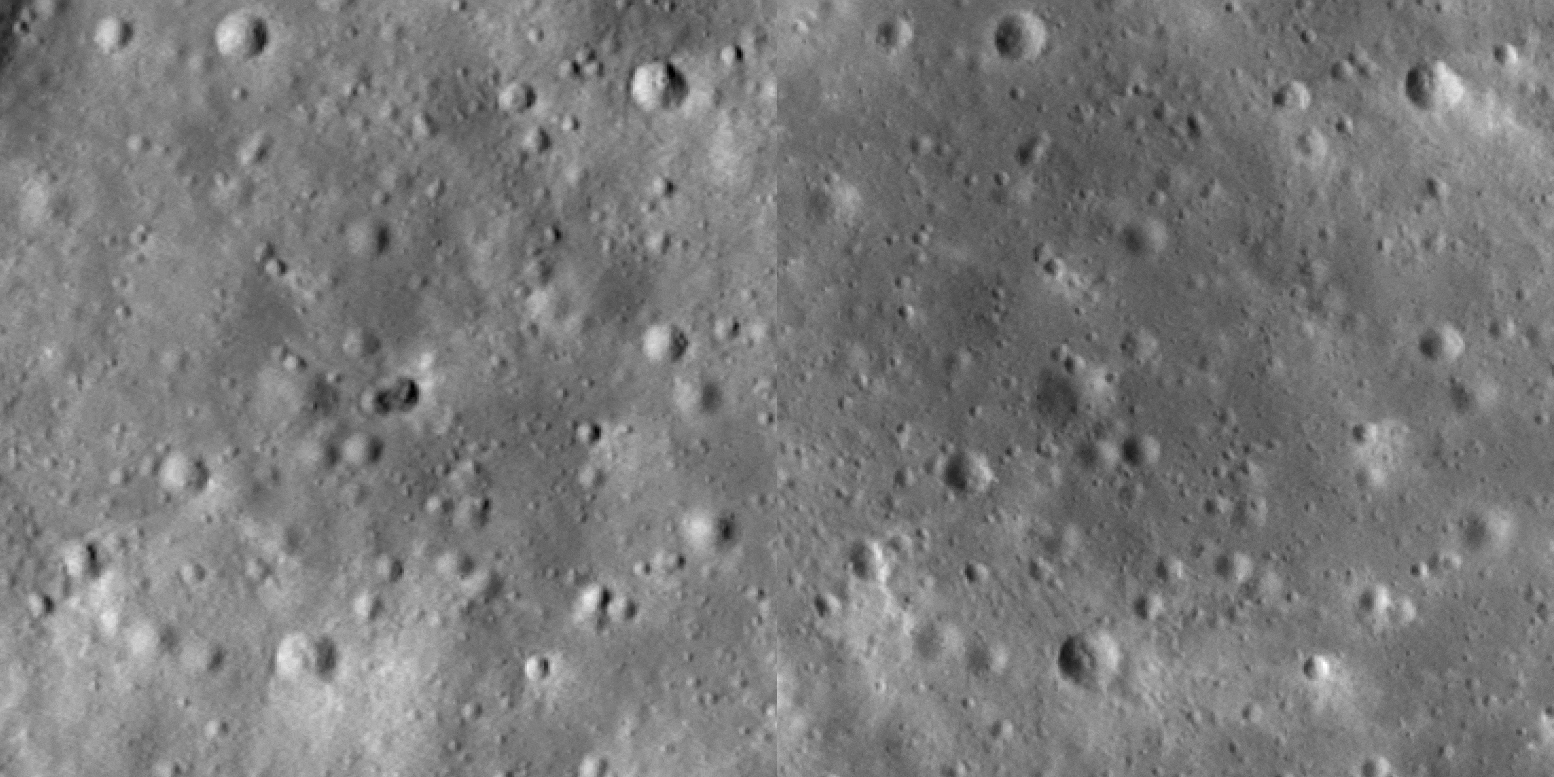
This animated GIF confirms the location of the newly formed rocket body double crater. The before image is LRO’s view from Feb. 28, 2022 (M1400727806L). The after image is from May 21, 2022 (M1407760984R). The width of the frame is 367 meters, about 401 yards. Credit: NASA/Goddard/Arizona State University
The double crater was unexpected and may indicate that the rocket body had large masses at each end. Typically a spent rocket has mass concentrated at the motor end; the rest of the rocket stage mainly consists of an empty fuel tank. Since the origin of the rocket body remains uncertain, the double nature of the crater may indicate its identity.
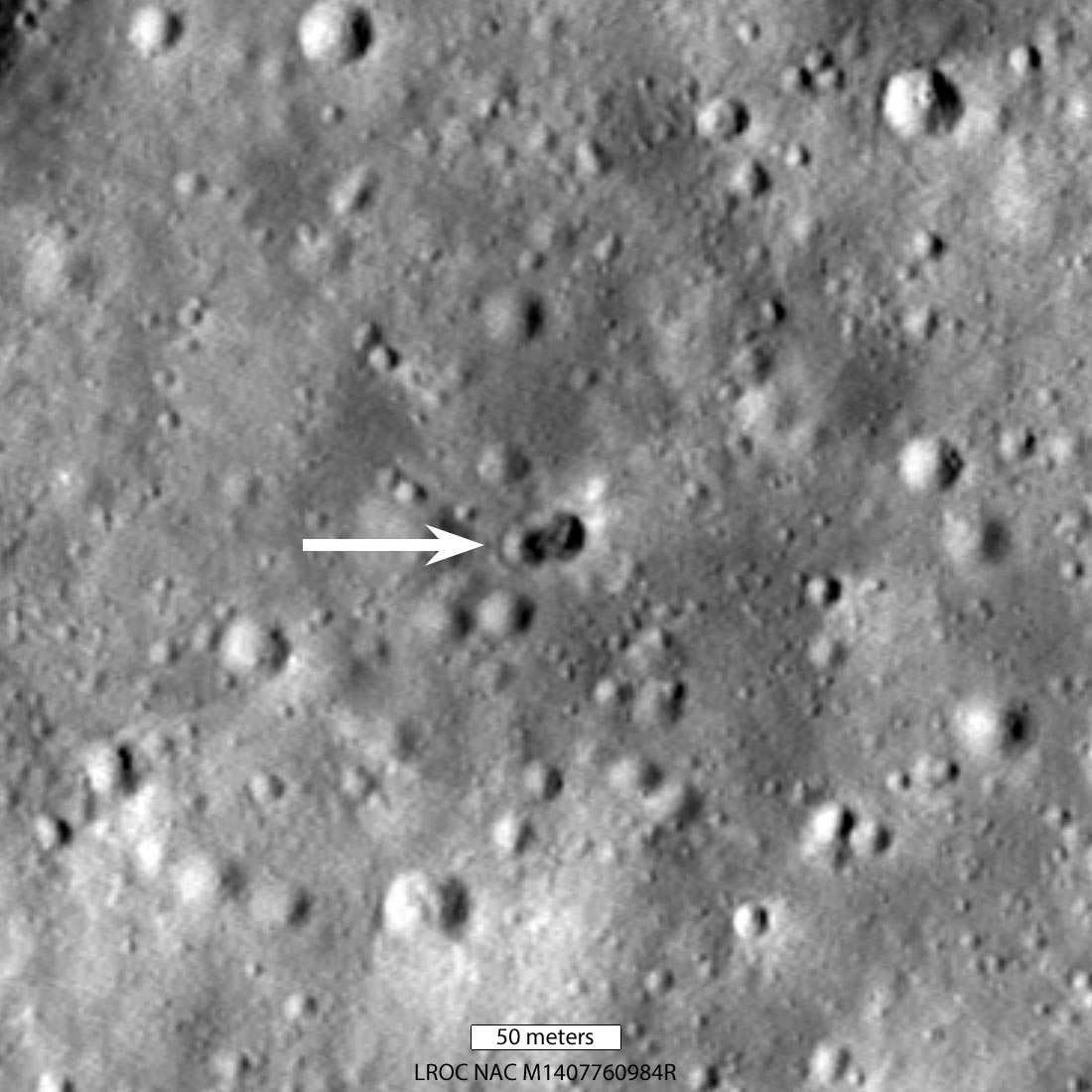
A rocket body impacted the Moon on March 4, 2022, near Hertzsprung crater, creating a double crater roughly 28 meters wide in the longest dimension. LROC NAC M1407760984R; image enlarged 3x. Credit: NASA/Goddard/Arizona State University
No other rocket body impacts on the Moon created double craters. The four Apollo SIV-B craters were somewhat irregular in outline (Apollos 13, 14, 15, 17) and were substantially larger (greater than 35 meters, about 38 yards) than each of the double craters. The maximum width (29 meters, about 31.7 yards) of the double crater of the mystery rocket body was near that of the S-IVBs.

These four images show craters formed by impacts of the Apollo SIV-B stages: crater diameters range from 35 to 40 meters (38.2 to 43.7 yards) in the longest dimension. Credit: NASA/Goddard/Arizona State University
NASA’s Lunar Reconnaissance Orbiter is a robotic spacecraft currently orbiting the Moon in an eccentric polar mapping orbit. LRO data is essential for planning NASA’s upcoming human and robotic missions to the Moon.
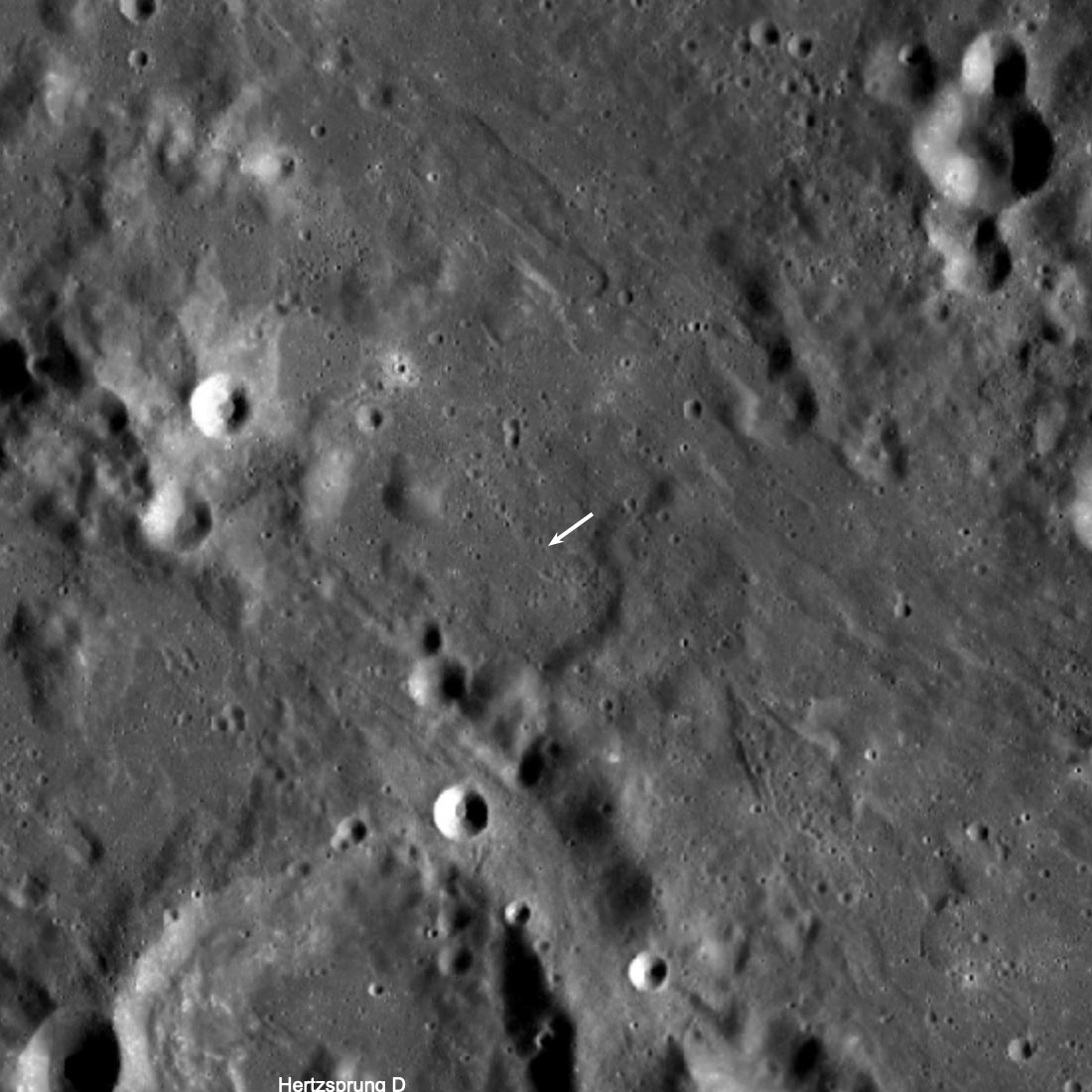
The crater formed (5.226 degrees north, 234.486 degrees east, 1,863 meters elevation) in a complex area where the impact of ejecta from the Orientale basin event overlies the degraded northeast rim of Hertzsprung basin (536 kilometers (333 miles) diameter). The new crater is not visible in this view, but its location is indicated by the white arrow. LROC WAC mosaic, 110 kilometers (68 miles) width. Credit: NASA/Goddard/Arizona State University
LRO is managed by NASA’s Goddard Space Flight Center in Greenbelt, Maryland, for the Science Mission Directorate at NASA Headquarters in Washington. Launched on June 18, 2009, LRO has collected a treasure trove of data with its seven powerful instruments, making an invaluable contribution to our knowledge about the Moon.
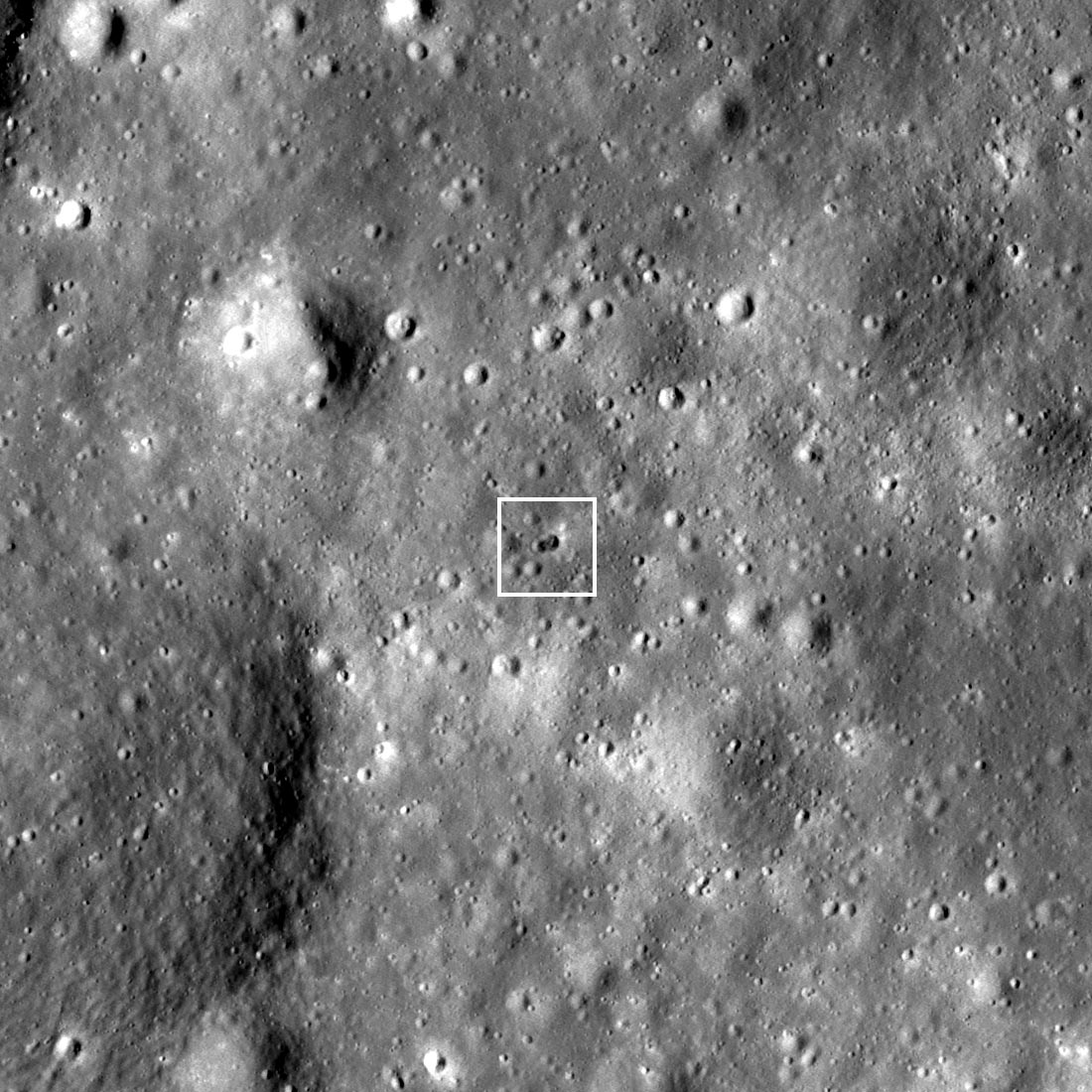
Full resolution (100 cm pixels) image centered on the new rocket body impact double crater. NAC M1407760984R, image width 1,100 meters. Credit: NASA/Goddard/Arizona State University
With Artemis, NASA is returning to the Moon with commercial and international partners to expand human presence in space and bring back new knowledge and opportunities.