
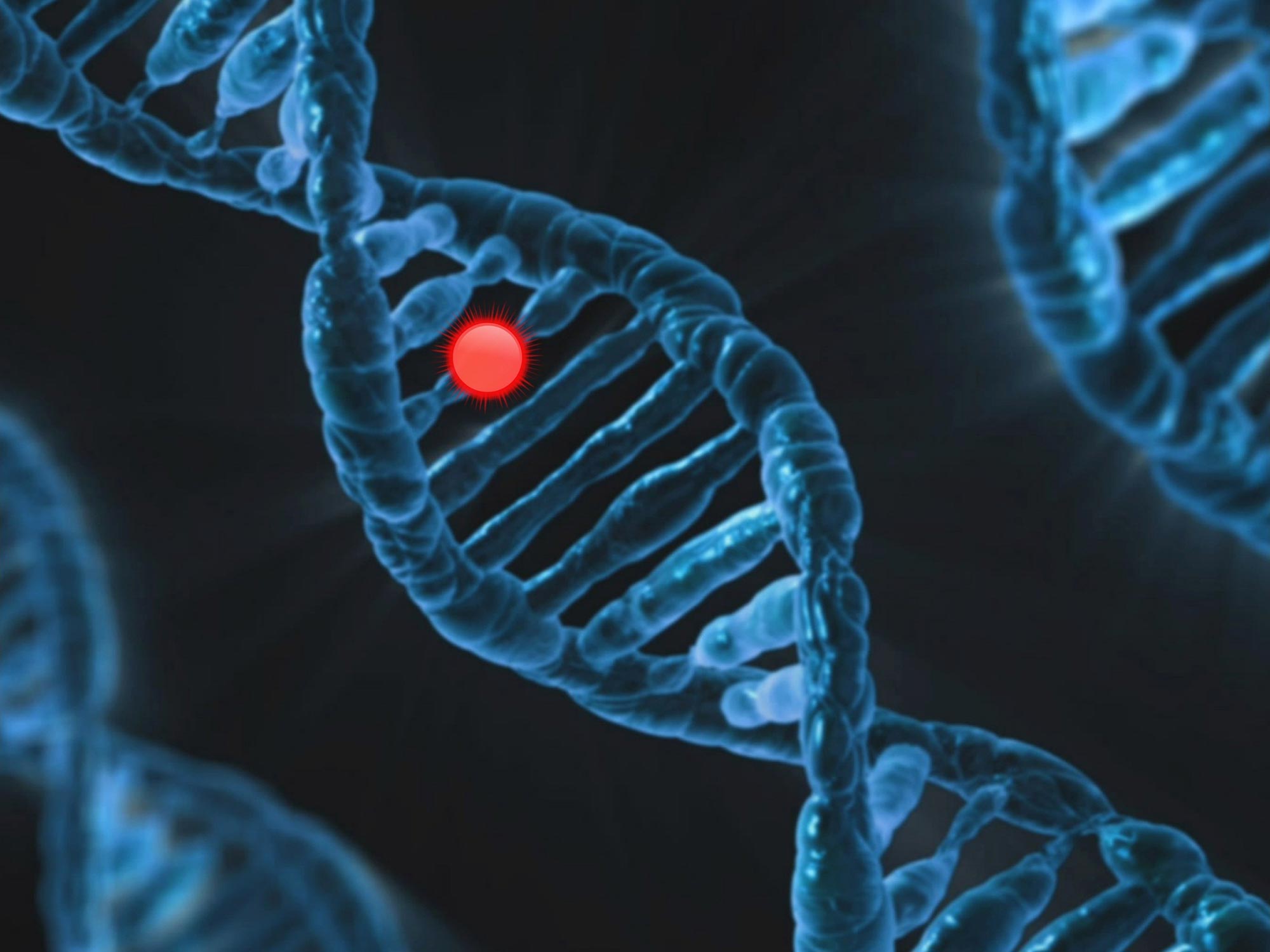

Synonymous mutations have long been thought to have relatively no effect.
A new study finds that most “silent” mutations are harmful rather than neutral.
Marshall Nirenberg, A University of Michigan Graduates, and a small group of researchers deciphering the genetic code of life in the early 1960s, discovered the base by which information is stored in[{” attribute=””>DNA molecules is converted into proteins, the functional components of living cells.
They discovered three-letter DNA units called codons that describe each of the 20 amino acids that make up proteins. This discovery would win Nirenberg and two others the Nobel Prize.
Occasionally, single-letter misspellings in the genetic code, known as point mutations, occur. Nonsynonymous mutations are point modifications that alter the protein sequences that result from them, while silent or synonymous mutations do not change the protein sequences.
One-quarter to one-third of protein-coding DNA sequence point mutations are synonymous. They have often been thought to be neutral or almost neutral mutations ever since the genetic code was deciphered.
But in a study recently published Nature that involved the genetic manipulation of yeast cells in the laboratory, University of Michigan biologists show that most synonymous mutations are strongly harmful.
The strong non-neutrality of most synonymous mutations—if found to be true for other genes and in other organisms—would have major implications for the study of human disease mechanisms, population and conservation biology, and evolutionary biology, according to the study authors.
“Since the genetic code was solved in the 1960s, synonymous mutations have been generally thought to be benign. We now show that this belief is false,” said study senior author Jianzhi “George” Zhang, the Marshall W. Nirenberg Collegiate Professor in the U-M Department of Ecology and Evolutionary Biology.
“Because many biological conclusions rely on the presumption that synonymous mutations are neutral, its invalidation has broad implications. For example, synonymous mutations are generally ignored in the study of disease-causing mutations, but they might be an underappreciated and common mechanism.”
In the past decade, anecdotal evidence has suggested that some synonymous mutations are nonneutral. Zhang and his colleagues wanted to know if such cases are the exception or the rule.
They chose to address this question in budding yeast (Saccharomyces cerevisiae) because the organism’s short generation time (about 80 minutes) and small size allowed them to measure the effects of a large number of synonymous mutations relatively quickly, precisely, and conveniently.
They used CRISPR/Cas9 genome editing to construct more than 8,000 mutant yeast strains, each carrying a synonymous, nonsynonymous or nonsense mutation in one of 21 genes the researchers targeted.
Then they quantified the “fitness” of each mutant strain by measuring how quickly it reproduced relative to the nonmutant strain. Darwinian fitness, simply put, refers to the number of offspring an individual has. In this case, measuring the reproductive rates of the yeast strains showed whether the mutations were beneficial, harmful or neutral.
To their surprise, the researchers found that 75.9% of synonymous mutations were significantly deleterious, while 1.3% were significantly beneficial.
“The previous anecdotes of nonneutral synonymous mutations turned out to be the tip of the iceberg,” said study lead author Xukang Shen, a graduate student research assistant in Zhang’s lab.
“We also studied the mechanisms through which synonymous mutations affect fitness and found that at least one reason is that both synonymous and nonsynonymous mutations alter the gene-expression level, and the extent of this expression effect predicts the fitness effect.”
Zhang said the researchers knew beforehand, based on the anecdotal reports, that some synonymous mutations would likely turn out to be nonneutral.
“But we were shocked by the large number of such mutations,” he said. “Our results imply that synonymous mutations are nearly as important as nonsynonymous mutations in causing disease and call for strengthened effort in predicting and identifying pathogenic synonymous mutations.”
The U-M-led team said that while there is no particular reason why their results would be restricted to yeast, confirmations in diverse organisms are required to verify the generality of their findings.
Reference: “Synonymous mutations in representative yeast genes are mostly strongly non-neutral” by Xukang Shen, Siliang Song, Chuan Li, and Jianzhi Zhang, 8 June 2022, Nature.
DOI: 10.1038/s41586-022-04823-w
The study was funded by the U.S. National Institutes of Health.