
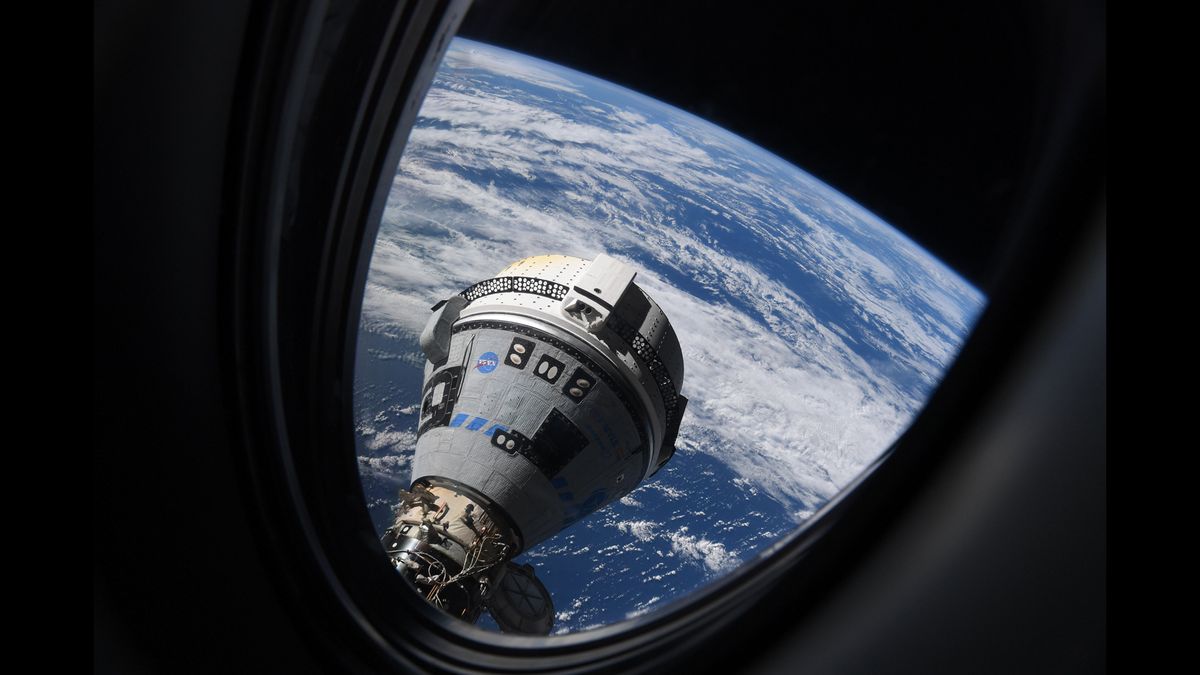
Boeing’s Starliner capsule is performing well enough on its first-ever space mission that it will likely be able to stay in orbit beyond the initially anticipated maximum of 45 days, NASA said.
Starliner launched on June 5 and is now docked to the International Space Station on an indefinite mission. The spacecraft is in good condition and is rated to leave the ISS in an emergency. But NASA and Boeing are trying to understand why some of Starliner’s reaction control system (RCS) thrusters experienced problems in the run-up to docking with the ISS on June 6, and why several helium leaks have appeared in the capsule. As such, Starliner will remain in space until at least later in the summer as testing and analysis continue. For example, a new round of engine testing on the ground will begin soon, possibly as early as today (July 2).
A June 15 in-orbit test failed to find the root cause of the problems, though agency officials on Friday (June 28) confirmed progress: The helium leaks had stabilized, and all but one of the errant thrusters were rated for use on the return to Earth. (Starliner has 28 thrusters in its remote control system; five of them misbehaved, and of those five, only one will shut down during separation.)
Since the remote control system is in the Starliner service module, which will be jettisoned before entry, descent and landing, the extra time in orbit will allow teams to take their time figuring out how to proceed. That will be crucial for any changes to the service module’s design that will be needed for Starliner’s future six-month orbital missions to the International Space Station as soon as 2025. But to give ground teams time to test, NASA says Starliner will need to stay on the dock for more than 45 days, the initial outer limit of this mission. The good news is that the spacecraft looks set to launch for perhaps twice that amount of time — or more.
Related: Engine failures and helium leaks can’t stop Boeing’s Starliner astronaut test flight – but why are they happening?
“We talked about a 45-day limit, limited by the batteries on the crew module on Starliner, and we’re in the process of updating that limit,” Steve Stich, NASA’s commercial crew program manager, told reporters during a conference call on Friday.
“We’ve been monitoring those batteries and their performance on orbit. They’re being recharged by the station, and that risk hasn’t really changed. So the risk over the next 45 days is basically the same as the first 45 days,” he said.
He noted that Starliner is designed to stay in orbit for up to 210 days once operational missions begin. But since this is only Starliner’s third mission in space, and its first with astronauts, NASA wasn’t sure how the battery would perform in orbit before now.
Asked by Space.com how long the mission could last, Stitch said, “We haven’t decided how long we can extend it.” He explained that Starliner has 12 different batteries. Prior to this flight, similar batteries had been on Earth for a year and were tested for defects, and none were found.
“What we’re doing now is monitoring the battery performance during flight. We don’t see any degradation in any of the cells that the batteries are in,” he added.
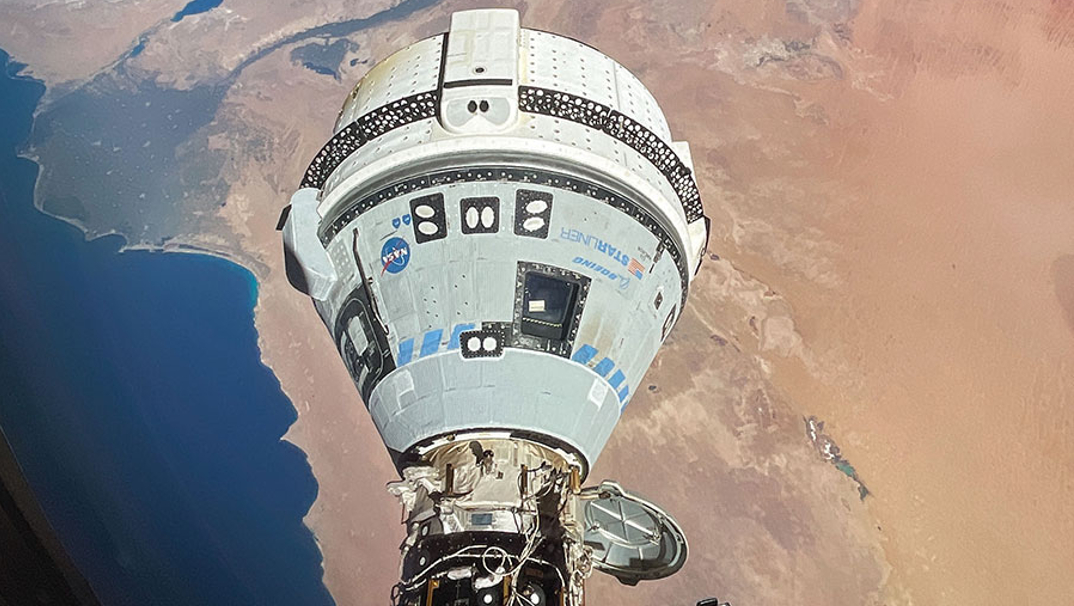
The current Starliner mission, called the Crew Flight Test (CFT), was originally supposed to last about 10 days. It will feature two NASA astronauts: Butch Wilmore and Suni Williams. Both are former U.S. Navy test pilots with decades of experience working on developmental missions like this spaceflight.
Wilmore told Space.com on May 1, before the launch, that the Navy gave the astronauts skills closely related to CFT, such as testing how systems work together. “Well, that’s really why we’re here,” he said, reflecting on the thousands of hours of flight experience the duo had put in. He later added that their expertise had been “invaluable to the operation” of working on Starliner.
The CFT was intended to test the unexpected in space, and it has flexibility in scheduling. Additional ground testing will be conducted at the White Sands Test Facility in New Mexico to try to replicate how the RCS thrusters will be used during flight and especially during docking. (NASA rejected the first docking attempt on June 6 but allowed a second attempt a few hours later.)
Meanwhile, Williams and Wilmore are supporting astronauts on the International Space Station on other missions while they await the results of the White Sands test, which will take less than two weeks. Recent NASA blog posts have detailed the work of astronauts in the CFT module on ISS maintenance: plumbing the orbit for a few days, and then more recently organizing items in the permanent Multipurpose Module.
Williams and Wilmore also worked at the Japanese Experiment Module on Monday (July 1) “to disassemble the empty NanoRacks CubeSat deployment module in preparation for upcoming NanoRacks missions.” NASA officials wrote: Monday (July 1)
The first two Starliner missions were uncrewed. The first in December 2019 failed to reach the International Space Station due to a computer glitch that stuck it in the wrong orbit. The second arrived safely at the ISS in May 2022 after Boeing made dozens of repairs, but Starliner’s thrusters have had some issues — another reason NASA and Boeing are taking their time with the CFT’s return to figure out why the spacecraft’s thrusters are misbehaving in 2022 and 2024.
Boeing is one of two suppliers for astronaut missions to the ISS, the other being SpaceX. Elon Musk’s company uses the Crew Dragon capsule, which is based on SpaceX’s Dragon cargo vehicle. Crew Dragon had a faster path to orbit: a single uncrewed mission in 2019, followed by a test flight with astronauts in 2020. Dragon has sent 11 crews to the ISS since then, most on six-month operational crew rotations for NASA.