
Close Menu
Westside People
    Facebook X (Twitter) Instagram
    Westside People
    Subscribe
    • Home
    • Top News
    • World
    • Economy
    • science
    • Tech
    • sport
    • entertainment
    • Contact Form
    Westside People
    Home»science»Study: Alaska Ice Field Glaciers Melting at ‘Extremely Alarming’ Rate
    science

    Study: Alaska Ice Field Glaciers Melting at ‘Extremely Alarming’ Rate

    Harper WinslowBy Harper WinslowJuly 4, 2024No Comments3 Mins Read
    Facebook Twitter Pinterest LinkedIn Reddit WhatsApp Email
    Study: Alaska Ice Field Glaciers Melting at ‘Extremely Alarming’ Rate
    Share
    Facebook Twitter Pinterest Reddit WhatsApp Email

    Glaciers in a large ice field in Alaska are melting at a rate twice as fast as recorded more than a decade ago, and researchers say the rate of ice loss is “extremely alarming.”

    The research was conducted by scientists from Newcastle University in the United Kingdom and published in Nature Communications Tuesday, it was revealed how the ice volume in the Juneau Ice Field has decreased dramatically since 2010 compared to previous decades.

    The Juneau Ice Field is located 2,000 feet north of Juneau and straddles the border with British Columbia and is the fifth largest ice field in North America.
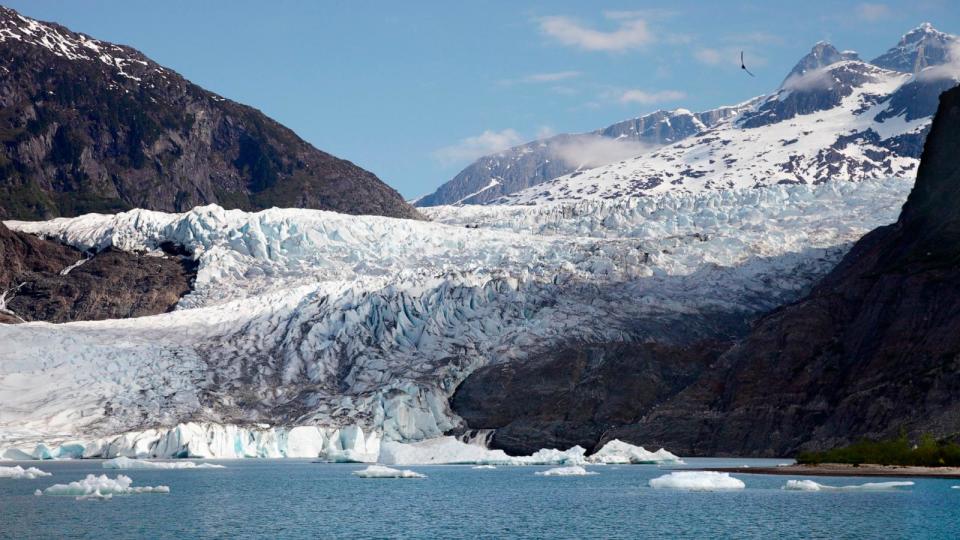
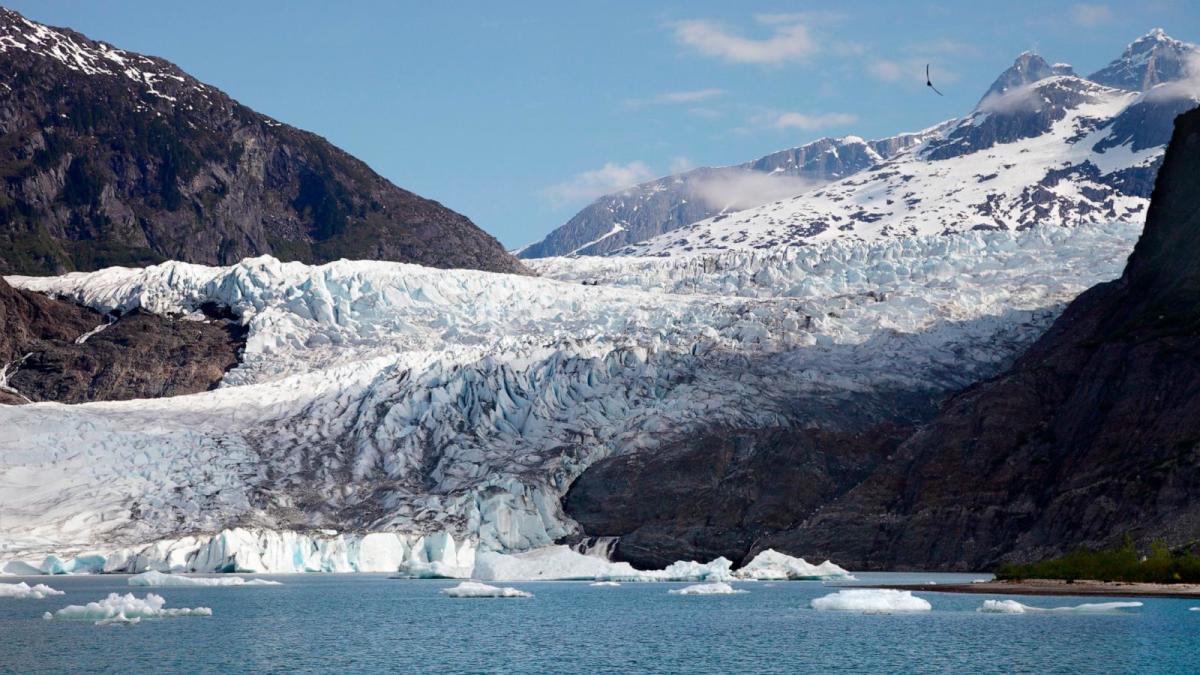
    Photo: An eagle soars over the Mandan Glacier in Alaska, in this undated photo. (Loop Images/Universal Images Group via Getty)Photo: An eagle soars over the Mandan Glacier in Alaska, in this undated photo. (Loop Images/Universal Images Group via Getty)

    Photo: An eagle soars over the Mandan Glacier in Alaska, in this undated photo. (Loop Images/Universal Images Group via Getty)

    The researchers looked at historical data to identify three periods when ice extent changed dramatically.

    According to the study, the volume of ice loss in the Juneau Ice Field remained constant from 1770 to 1979, losing between 0.65 and 1.01 cubic kilometers per year. In the second period, from 1979 to 2010, the volume of ice loss increased to 3.08 and 3.72 cubic kilometers per year.

    More: Melting polar ice is changing Earth’s rotation, affecting how we measure time: study

    What has the researchers concerned is that the Juneau Glacier’s volume loss between 2010 and 2020 accelerated to 5.91 cubic kilometers, according to the study.

    “It is incredibly alarming that our research has found a rapid acceleration since the early 21st century in the rate of glacier loss on the Juneau Ice Field,” said study leader Dr. Bethan Davies, a lecturer at Newcastle University, in the journal Nature on Tuesday.
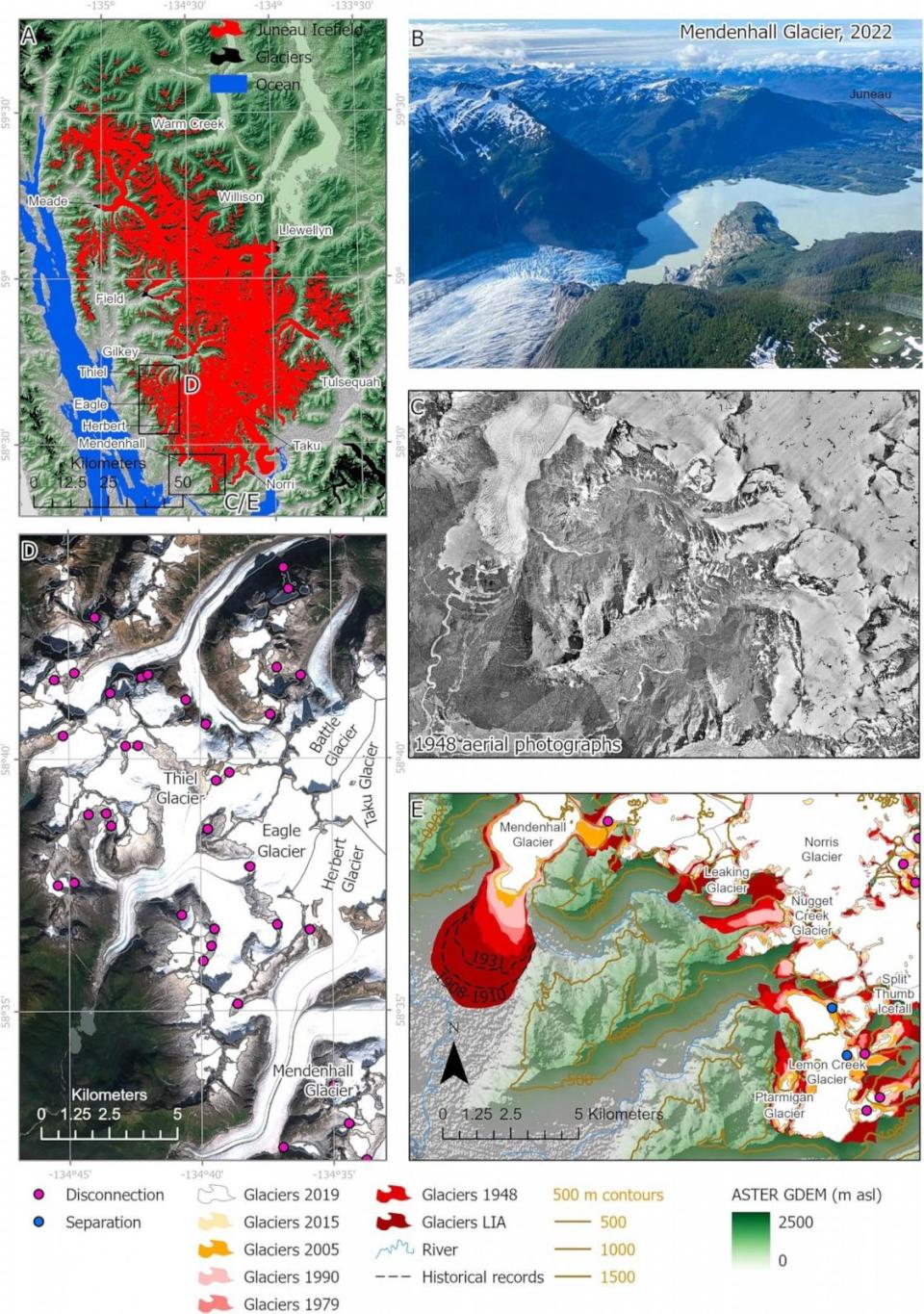
    Image: Juno Ice Field and its evolution over time. (Nature.com)Image: Juno Ice Field and its evolution over time. (Nature.com)

    Image: Juno Ice Field and its evolution over time. (Nature.com)

    Davies explained why the region is becoming less vulnerable to accelerated glacial melt under climate change.

    “Alaska’s ice fields — which are mostly flat ice fields on plateaus — are particularly vulnerable to accelerated melting as the climate warms because ice loss occurs across the entire surface, meaning a much larger area is affected,” Davis said.

    More: Food prices could rise further as climate change impacts inflation worldwide: study

    The study found that since 1770, 108 glaciers in the Juneau Ice Field have completely disappeared, and maps in 2019 showed that all glaciers in the region are thinning.

    “As glaciers on the Juneau Plateau continue to melt and the ice retreats to lower levels and warmer air, the feedback processes this triggers will likely prevent glaciers from growing again in the future,” Davis said, adding that this could push glaciers “beyond the tipping point into irreversible stagnation.”

    Study: Alaska Ice Field Glaciers Melting at ‘Extremely Alarming’ Rate Originally appeared on abcnews.go.com

    Harper Winslow
    Share. Facebook Twitter Pinterest LinkedIn WhatsApp Reddit Email
    Previous ArticleSan Diego Wave Denounces Former Employee’s Allegations of Poor Work Environment Under Jill Ellis
    Next Article Kris Jenner reveals she has ovarian tumor on ‘The Kardashians’

    Related Posts

    New Theory Suggests the Big Bang May Be Simpler Than We Thought

    April 3, 2026

    NASA Releases Striking Images From Latest International Space Station Spacewalk

    April 1, 2026

    NASA Asteroid Debris May Bring ‘Beautiful, Luminous’ Light Show Above Earth

    August 24, 2024

    NASA announces the possibility of returning astronauts stranded on board the Starliner spacecraft | Space

    August 23, 2024

    Latest news on climate ‘doomsday’ scenarios: Atlantic circulation and ice melt

    August 23, 2024

    How to watch it in Vero Beach or Sebastian

    August 23, 2024
    Add A Comment
    Leave A Reply Cancel Reply

    Navigate
    • Home
    • Top News
    • World
    • Economy
    • science
    • Tech
    • sport
    • entertainment
    • Contact Form
    Pages
    • Home
    • Privacy Policy
    • Editorial Policy
    • DMCA
    • About Us
    Facebook X (Twitter) Instagram Pinterest
    © © 2026 WestsidePeopleMag.com. Independent stories, culture, and community coverage. All rights reserved.

    Type above and press Enter to search. Press Esc to cancel.