
by
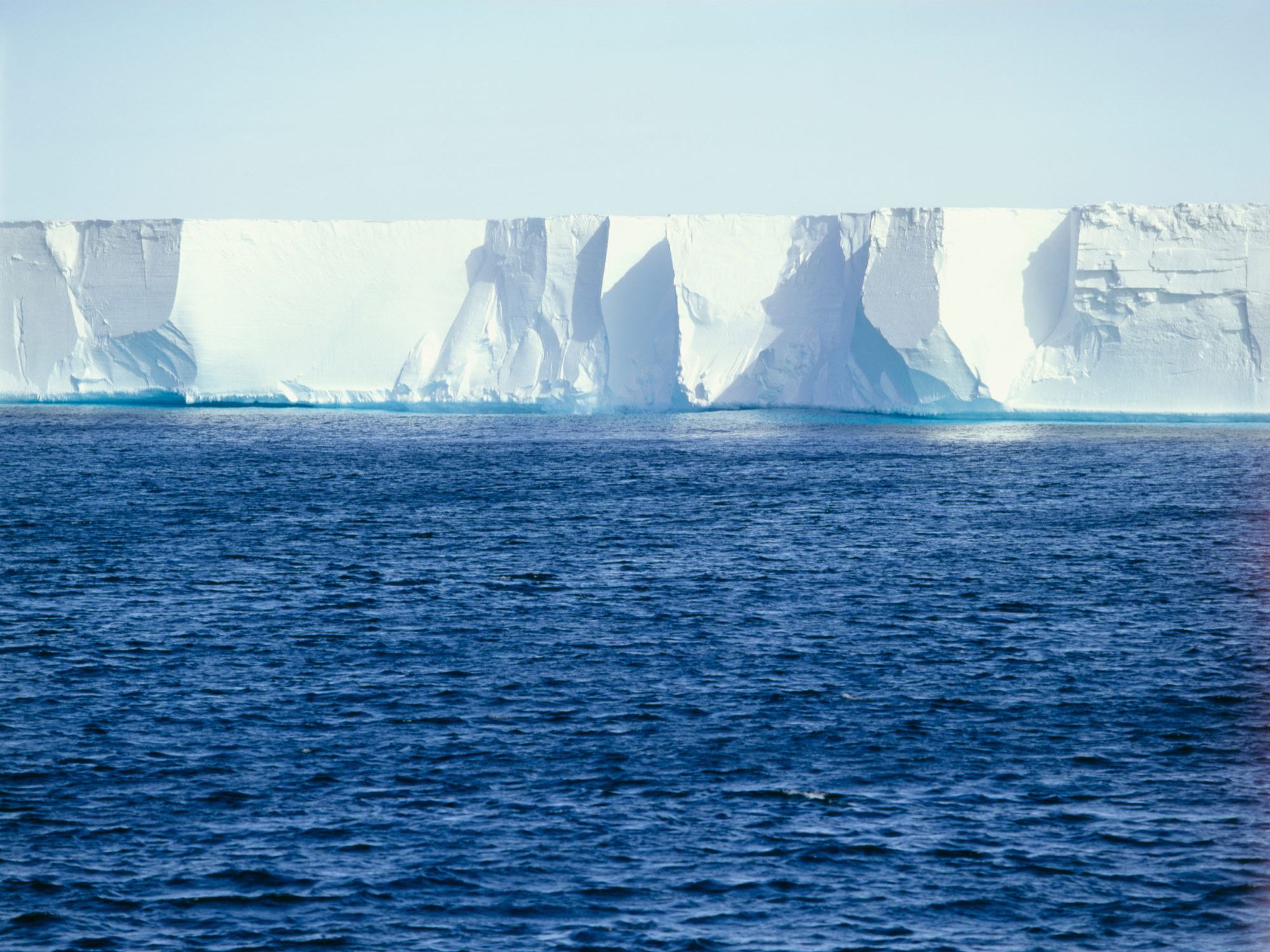
Research from Washington University in St. Louis reveals that Antarctica’s Ross Ice Shelf, roughly the size of France, is being broken up daily by an ice stream. This movement, caused by sudden sliding in the ice stream, can affect ice quakes and shelf fractures, raising concerns about ice shelf stability in a warming world.
An ice stream activity suddenly dislodged the Ross Ice Shelf.
In Antarctica, huge glaciers are constantly changing. Ice streams, which act like conveyor belts, are paths of accelerated motion that transport the majority of ice and sediment debris from these vast glaciers toward the ocean.
One of these ice streams is pushing the entire Ross Ice Shelf out of place at least once a day, according to new research from Washington University in St. Louis.
This finding is important because of the size of the Ross Ice Shelf: it is the largest ice shelf in Antarctica, about the same size as France.
Doug Wiens, of the Robert S. Brookings: “We found that the entire shelf suddenly moves about 6 to 8 centimeters (or 3 inches) once or twice a day, due to the sliding of an ice stream flowing onto the ice shelf.” Distinguished Professor of Earth, Environmental, and Planetary Sciences in Arts & Sciences. “These sudden movements likely play a role in triggering icequakes and fractures in the ice shelf.”
The Ross Ice Shelf is a floating ice ledge that extends over the ocean from inland glaciers.
Scientists are interested in interactions between ice shelves and ice streams in part because they are concerned about the stability of Antarctica’s ice shelves in a warming world.
Ice shelves act as brakes for glaciers and ice streams, slowing their journey to the sea where they melt, allowing more ice to accumulate on the continent. If the ice shelf collapses, this support disappears and the glaciers flow faster. Once they flow into the ocean, they contribute to sea level rise.
The new study, in Geophysical Research Lettersfocuses on the movement caused by the Whillans Glacier Stream, one of about six large, fast-moving rivers of ice flowing into the Ross Glacier Shelf.
“One cannot detect movement just by feeling it,” Wiens said. “Motion occurs over a period of time of up to several minutes, so it cannot be perceived without instruments. That is why motion has not been detected until now, even though people have been walking and camping on the Ross Ice Shelf since the time of the great explorers Robert F. Scott and Roald Amundsen.”
Sudden slip
The movement of the Ross Ice Shelf is caused by a relatively sudden – in glacial terms – movement of an ice stream called a sliding event. It is somewhat similar to the “stick slip” that occurs along a fault before and during an earthquake.
Under the scenario observed by Whillans and his team, a large section of the Whillans Ice Stream, more than 100 km by 100 km, remains stationary while the rest of the ice stream creeps forward. Then, once or twice a day, the large section moves forward toward the Ross Ice Shelf.
It can move up to 40 cm (16 inches) in a few minutes, Wiens said.
Studies of ice streams over the past 50 years show that some ice streams speed up, while others slow down. Scientists can use seismometers to detect the sudden movement of ice streams to help understand what controls this movement. Wiens and his team traveled to Antarctica in 2014 to set up the seismometers used in this study.
“I’ve published several papers on Whillans Ice Stream sliding events in the past, but I haven’t discovered that the entire Ross Ice Shelf is also moving until now,” Wiens said.
Researchers do not believe these slip events are directly related to human-caused global warming. One theory is that it is caused by water loss at the bottom of the Whillans Glacier, making it more “sticky”.
The stress and strain associated with slip events are similar to the stress and strain observed to trigger icequakes under various conditions.
“At this point, earthquakes and ice fractures are just part of the normal life of the ice shelf,” Wiens said. “There is concern that the Ross Ice Shelf will break apart one day, as other smaller, thinner ice shelves have done so. We also know that the Ross Ice Shelf broke up during the last glacial period – about 120,000 years ago – causing rapid ice loss to the glaciers.” And the ice currents that feed it.
Reference: “Displacement of the Ross Ice Shelf and Elastic Plate Waves Triggered by Whillans Ice Stream Sliding Events” by Douglas A. 2024, Geophysical Research Letters.
doi: 10.1029/2023GL108040